TEL: 0391-3581232


Case Details
On December 10, 2024, Shang Mousan was riding a bicycle across the road when he collided with a heavy semi-trailer driven by Ma Mou. The accident resulted in Shang Mousan's immediate death. On December 31, 2024, the Traffic Police Brigade of Bo'ai County Public Security Bureau issued an accident responsibility determination, determining that Shang Mousan was primarily responsible for the accident and Ma Mou was responsible for the minor liability. The vehicle involved in the accident had taken out compulsory traffic insurance and commercial third-party liability insurance with Sunshine Insurance Company. The accident compensation was within the coverage of the insurance policy.
After the accident, according to the certificate issued by the local village committee and the information on the five-guarantee household registration, Shang Mousan was a lonely and elderly person in the village with no registered spouse or children. His daily life and medical care were entirely dependent on his elder brother Shang Mouer, nephew Shang Xiaomou, and sister Shang Xiaoda. Therefore, the family representatives, including Shang Xiaomou, negotiated compensation matters with the driver of the vehicle involved in the accident and the insurance company. The three parties initially reached a consensus on compensation.
However, during the insurance company's claim review stage, the staff checked the household registration files and discovered that Shang Mousan's household registration marital status was "married". Based on this registration information, the insurance company determined that there was an unknown legal claimant for compensation, in order to avoid compensation errors, it immediately suspended all compensation payments.
On one hand, the family members of the deceased had spent years but were unable to obtain a reasonable compensation. On the other hand, the questionable household registration information led to the suspension of the claim process. The contradiction between the two sides reached an impasse. To protect their own legal rights and interests, the close relatives of Shang Mousan, Shang Xiaoda, Shang Mouer, and Shang Xiaomou entrusted Jin Yan Lawyer Zhang Shaoshao to file a lawsuit, claiming all the compensation rights for the accident involved.
Case Analysis
The core of the dispute in this case is not the determination of the accident liability, but the controversy over the distribution of compensation funds under a special identity. There is a significant discrepancy between the household registration information and the objective facts, and the case trial is prone to mechanical application of the law and unfair judgment. After accepting the client's commission, Lawyer Zhang Shaoshao of Jin Yan did not directly initiate the litigation process. Instead, he precisely analyzed the case's pain points and formulated a complete case handling plan that first verified the facts, then clarified the law, and finally sought fair judgment. He led the case throughout the process and broke the deadlock.
(1) Precisely formulate case handling ideas, lock in the case breakthrough
Based on the client's statements and the existing written evidence, Lawyer Zhang Shaoshao found that there were significant factual doubts in this case: The village committee certificate and the five-guarantee household registration file both confirmed that the deceased was an elderly person without a spouse, but the household registration information showed that he was married. The two pieces of evidence were contradictory. To restore the truth of the case and protect the client's legal rights and interests, Lawyer Zhang Shaoshao established three core case handling directions: First, comprehensively verify the deceased's true marital status and verify the authenticity of the "married" registration in the household registration; second, clarify the identity, survival status, and actual marital status of the so-called "spouse"; third, even if there is a legal spouse, combine the objective facts that the two have been separated for decades, have no mutual support in raising children, and the deceased was fully cared for by the close relatives, strive to secure all or most of the compensation rights for the actual caregiver.
(2) Exhaust all investigation methods, restore the objective case facts
To solve the contradiction in evidence, Lawyer Zhang Shaoshao immediately visited the relatives of the deceased's elders to verify the information. They identified key clues: The deceased had married into a neighboring village and later returned alone to live. The relatives were not aware of whether he had gone through marriage or divorce procedures.
Due to the long history and incomplete preservation of the archives, Lawyer Zhang Shaoshao conducted a comprehensive and multi-level investigation and evidence collection. First, he searched the marriage registration office for marriage records. Due to the early date of the client's marriage registration, no records were found. Not stopping there, based on the staff's suggestions, he specially went to the county archives to retrieve old archives and finally verified the key fact that the deceased was registered as married with another person named Wang Mou in January 1988. After confirming the identity of the spouse, the lawyer relied on the public security household registration information to accurately determine the place of residence of Wang XX, and conducted multiple on-site visits and multiple verifications. Eventually, the actual residence address was confirmed. To ascertain the true status of the marriage, the lawyer actively contacted the presiding judge and applied for on-site verification of the case situation before the court.
After on-site verification, it was found that after Wang XX and Shang XX III registered their marriage, they lived together for nearly ten years. Due to the breakdown of their relationship, they completely separated. Shang XX III returned to his hometown to live. Due to the low legal awareness of both parties, they had never gone through divorce registration for nearly thirty years, and their marital relationship was in a state of legal continuation and factual extinction. During these thirty years, there was no communication or mutual assistance between them, nor any children born. On the day of the verification, Wang XX stated in court that he claimed to divide the compensation money involved in the case. The difficulty of the case further escalated.
(3) Precisely apply legal rules to break through mechanical judicial misunderstandings
During the pre-trial communication, the presiding judge's initial opinion was: Wang XX and the deceased had a legal marriage registration, belonging to a legal spouse. According to the conventional judicial thinking, the compensation money could be prioritized to be divided among the heirs based on inheritance rules, and the other near relatives could only be entitled to a酌情 division of part of the funds.
If following this judicial logic, the family members who had provided decades of care obligations would not be able to obtain reasonable compensation. The spouse who had never fulfilled any marital obligations for nearly thirty years would instead benefit. This clearly violates the principle of fairness and social order and good customs. In response to this unfavorable situation, Lawyer Zhang Shuai of Jin Yan Law Firm delivered the core legal opinion in court, precisely reversing the judicial thinking of the case:
First, clarify the legal nature. Funeral expenses, death compensation, and mental distress compensation are based on the death of the deceased, providing material losses and spiritual comfort to the relatives of the deceased. They do not belong to the legal inheritance left by the deceased and must not be directly divided according to the legal inheritance order.
Second, distinguish the relationship between law and fact. Although judicial practice in this case often refers to inheritance rules to divide the compensation money, reference does not mean copying. Although Wang XX was a legal spouse, their marriage had long ceased to exist. There was no contact, no mutual support, and no mutual assistance between them for nearly thirty years, and they had already lost the identity dependence relationship as near relatives.
Third, adhere to the bottom line of fair judicial thinking. The three plaintiffs had been taking care of the elderly for decades and had fulfilled all the support and maintenance obligations. They were the closest relatives to the deceased and had made the greatest efforts. They should receive the main share of the compensation money.
To strengthen the authority and persuasiveness of the legal opinion, Lawyer Zhang Shuai of Jin Yan Law Firm searched for authoritative court cases of the Supreme People's Court and submitted the typical case published in the "People's Court Newspaper" of the Nanjing Intermediate People's Court to the court. This case clearly established the core judicial principle of distributing death compensation based on the closeness of the relationship with the deceased and the amount of support and assistance provided, providing an authoritative reference basis for this case.
Under the multiple legal reasoning communications, case precedent support, and factual argumentation by Lawyer Zhang Shuai of Jin Yan Law Firm, the presiding judge fully adopted the core legal opinion of the lawyer and abandoned the mechanical judicial thinking. The objective facts, actual efforts, and fairness and good order were taken as the core basis for the case judgment.
(4) Facilitate four-party mediation to achieve case closure, peace and harmony
Based on the clear understanding of all facts and the clarification of legal relationships, Lawyer Zhang Shuai of Jin Yan Law Firm actively cooperated with the court to carry out mediation work, balancing the interests of all parties while considering the emotions and laws. Finally, the insurance company, the driver involved in the accident, the deceased's spouse, and the relatives of the plaintiffs reached a consensus mediation plan: The 210,000 yuan compensation paid by the insurance company would be fully paid to the three plaintiffs who had been taking care of the deceased for a long time; the three plaintiffs would compensate Wang XX 10,000 yuan as a one-time compensation for his nominal spouse status.
At present, the insurance company has fully paid the compensation, the plaintiffs have fulfilled the compensation obligation, and all disputes have been completely resolved. There is no appeal or petition, achieving the dual unification of legal effect and social effect.
Case significance The successful conclusion of this case fully demonstrates the core professional value of Jin Yan lawyer Zhang Shuai-shuai in resolving complex civil disputes by clarifying facts, understanding legal principles, upholding fairness, and resolving conflicts. It has extremely strong judicial reference significance and practical application value:
1. Break through mechanical justice and implement the principles of fairness and public order in the Civil Code
The current Civil Code clearly stipulates the rules for inheritance of estates, but does not specify the distribution rules for compensation for death caused by traffic accidents. In judicial practice, there is often a situation where the legal inheritance order is directly applied for judgment. In this case, lawyer Zhang Shuai-shuai of Jin Yan accurately grasped the core contradiction of the case, broke the fixed thinking of "those with registered identities have priority in distribution", and successfully pushed the court to use the actual support during life, the closeness of relatives, and proximity of distance as the core standards for compensation fund distribution. This allowed those who actually made contributions to obtain their due rights, eliminating the unfair result of "having an identity but benefiting, while actually contributing but suffering losses", and precisely implemented the principles of fairness and public order in the Civil Code.
2. Rigorously verify evidence and exhaust all means to restore the objective truth of the case
The initial evidence in this case was clearly conflicting. The official materials issued by the village committee and the civil affairs department all proved that the deceased was an elderly person living alone. However, if the judgment was made based solely on the written evidence, it would easily overlook key parties and trigger subsequent retrial disputes. During the case handling process, lawyer Zhang Shuai-shuai did not blindly follow the existing written evidence, fully exercised the lawyer's right to investigation and evidence collection, and through cross-departmental file retrieval, on-site visits, and verification of the case situation, etc., he clarified the historical marital facts over several decades, completed the key evidence chain of the case, and helped the judicial authorities restore all objective facts. This not only protected the legitimate rights of the outside parties but also effectively safeguarded the core interests of the client, minimizing the occurrence of judicial flaws and subsequent disputes to the greatest extent.
3. Efficiently resolve conflicts and achieve substantive settlement of disputes
If the spouse was mechanically awarded a larger share of the compensation funds, it would inevitably trigger strong resistance from the parties, leading to subsequent lawsuits such as second instance and re-trial, and exacerbating conflicts among relatives. Lawyer Zhang Shuai-shuai successfully reversed the case direction through professional legal argumentation, authoritative case support, and communication combining reason and emotion, facilitating a four-party mediation settlement, completely resolving the disputes among multiple parties, and truly achieving case closure, matter resolution, and harmony among people, demonstrating the important role of legal services in resolving grassroots civil conflicts.
Lawyer Introduction
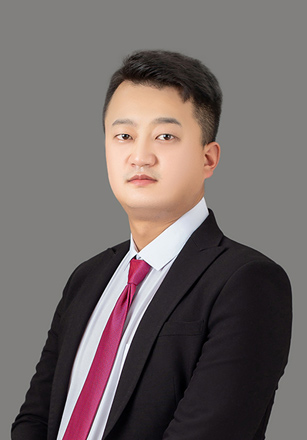
Zhang Shuai-shuai, a member of the Communist Party of China, is a practicing lawyer at Jinyan Law Firm. He graduated from the Law Department of Zhengzhou University.
He has handled over a hundred cases of civil and commercial litigation, criminal defense, administrative cases, etc., including various litigation, arbitration and non-litigation legal services. In April 2021, the case "Kong's Liability for Safety Assurance Obligations in Dispute" he handled was rated as one of the "Top Ten Excellent Legal Aid Cases of Jiaozuo City in the Sixth Session".
Contact Information:
Telephone: 13839145917
Email: 504930049@qq.com

official Weibo:JINYAN LAW FIRM WeChat Official Accounts:JINYAN LAW FIRM(jinyanlawfirm)
Case number: 豫ICP备20020393号
Technical Support:jzline
0391-3581232
 WeChat scan code
