TEL: 0391-3581232


Basic Facts
Ms. A, an owner in Jiaozuo City, owned a commercial property in a bustling area. In April 2020, Ms. A leased the property to Ms. B, and they agreed on a lease term of 3 years. During the lease period, Ms. B had fully paid the rent for the first two and a half years to Ms. A. When the lease period was about to end with half a year remaining, Ms. B sublet the property and used it for a small restaurant. The rent for this half-year was paid by C leased through a WeChat transfer, and C leased clearly noted in the WeChat message that this amount was for the second half-year rent of the property. Due to the impact of the epidemic, the business of the property was hindered, and the lease period was extended. It was finally extended until August 9, 2023. During the lease extension period, matters such as the business arrangement of the property, the extension matters, and the duration of the extension were all discussed directly between C leased and the property owner Ms. A via WeChat, and C leased always discussed the matters related to the property in the tone of a lease user.
Later, due to government planning, D Commercial Company carried out unified renovation and operation management of the commercial street, and dozens of property owners in the street area signed lease contracts with D Commercial Company. Ms. A also signed a lease contract with D Commercial Company, agreeing to deliver the subject property in its current state to D Commercial Company starting from August 10, 2023, with a lease term of 10 years.
Before signing the contract with D Commercial Company, Ms. A had already informed C leased via WeChat that after the expiration of the property, she would no longer renew the lease and would uniformly lease it to D Commercial Company. On August 9, 2023, Ms. A clearly informed C leased that this day was the last day of the lease term and asked C leased to vacate the property within a limited time to facilitate the completion of the property handover on August 10.
In December 2025, D Commercial Company filed a lawsuit with the court for a dispute over the lease contract, suing C leased and listing Ms. A as a third party in the case. The specific litigation requests were as follows: First, require C leased to immediately vacate and return the subject property; second, require C leased to pay the rent for the use of the property; third, require C leased to bear the property management fees.
After receiving the court's complaint, C leased was astonished and immediately entrusted lawyer Chen Deguang from Jinyan Law Firm to handle the case. After receiving the commission, lawyer Chen Deguang from Jinyan Law Firm first guided C leased to review the evidence materials of the plaintiff at the court. It was found that D Commercial Company submitted evidence including the rent transfer record from C leased to Ms. A and all the WeChat chat records between C leased and Ms. A. The presiding judge stated that based on the existing evidence, it could be determined that C leased was the tenant of the subject property. If C leased failed to fulfill the obligation of property delivery, she would be legally liable.
Case Fact Summary
After detailed verification of the facts of the case by lawyer Chen Deguang from Jinyan Law Firm, C leased truthfully stated that the actual sub-tenant of the subject property was not herself but Ma Nan, and the remaining half-year rent was paid by Ma Nan in cash to C leased. Because Ms. A was at that time in Zhengzhou and inconvenient to receive the cash, C leased deposited the cash in her personal bank card and then transferred it to Ms. A via WeChat. The process was known to the second landlord B女士 and could be confirmed.
Regarding the situation where she communicated with Ms. A in the tone of a tenant, C leased explained that she was entrusted by Ma Nan to handle the lease-related matters throughout the process, and all details of the communication were simultaneously informed to Ma Nan, only acting as an agent. At the same time, it was revealed by C leased's relatives (the introducer of this case) that C leased and Ma Nan had a special relationship at that time. On August 9, 2023, after receiving the notice to vacate from Ms. A, C leased immediately informed Ma Nan that she would no longer go to the property after the lease expired, and she had no knowledge of the subsequent usage of the property.
Afterward, C leased verified that for more than two years after the lease term ended, the subject property was actually occupied and used by Ma Nan. The office location of D Commercial Company is less than 100 meters away from the disputed shop. The company's staff had repeatedly urged Ma Man to vacate the premises, but Ma Man refused to cooperate. As Ma Man was a person with a bad reputation and had a long history of misconduct, it was difficult to hold him accountable. Therefore, D Commercial Company based on the chat and transfer records of Ms. C and Ms. A, filed a lawsuit against Ms. C, who had strong economic performance and was easy to hold accountable.
Lawyer's evidence-gathering strategy and process
At the beginning of the case, lawyer Chen Deguang of Jin Yan Law Firm faced a difficult problem of evidence collection. There was only the unilateral statement of Ms. C, and key witness Ms. B was unwilling to appear in court. There was no direct evidence linking the actual occupant Ma Man. To break the deadlock, the lawyer instructed Ms. C to conduct on-site verification of the shop's current situation. It was learned that Ma Man had transferred the shop to a man with the surname Cao, and Cao was preparing to renovate and open the shop. Based on this, lawyer Chen Deguang of Jin Yan Law Firm formulated a scheme of seizing the wrong situation and reporting it as evidence.
Lawyer Chen Deguang of Jin Yan Law Firm informed Ms. C that she should prepare a padlock and let D Commercial Company cooperate to complete the delivery process. Even though he knew that Ma Man controlled the shop and Ms. C could not deliver it independently, he still actively invited the staff of D Commercial Company to the scene to lock the room and hand it over. D Company knew that it was not Ms. C who occupied the shop but its claim was to have Ms. C vacate the premises, and it had no choice but to send personnel to the scene. After arriving at the scene, Ms. C's act of locking the room was blocked by Cao, who was in the process of renovation. A conflict occurred, and Ms. C immediately called the police. After the police arrived, Cao showed the police the lease and transfer contract he signed with Ma Man, clearly stating the actual transfer and occupancy situation of the shop. The lawyer specifically instructed Ms. C before the case that the police should record in detail the reasons for the conflict, the occupants, and the transfer process in the police report. The lawyer then retrieved the police report and used this key evidence to apply to the court to add Ma Man as a defendant in the case.
Due to the complexity of the case facts and the presence of many involved parties, the court ruled to convert the summary procedure into a regular procedure and organized three court hearings. During the court hearings, the third party who appeared in court was not Ms. A, the landlord, but her husband. And he stated in court that he did not know Ma Man and was unaware of the lease transfer matters. In the first two court hearings, the second tenant, Ms. B, still refused to appear in court to testify.
During the court proceedings, lawyer Chen Deguang of Jin Yan Law Firm focused on presenting counterarguments: First, the actual tenant of B was Ma Man, not Ms. C; second, D Commercial Company, as the management entity of the commercial street, was less than 100 meters away from the shop, and had repeatedly urged Ma Man to vacate the premises, clearly knowing that the actual occupant was Ma Man, but wrongly sued Ms. C, who had no actual occupancy behavior. This was a mistake in the defendant. At the same time, the lawyer submitted a video of on-site distance measurement to prove the geographical facts.
In the second court hearing, the presiding judge adopted the counterarguments of lawyer Chen Deguang of Jin Yan Law Firm and ordered the plaintiff's lawyer to contact the previous staff of D Commercial Company's urging. During the call, the staff was unprepared and truthfully stated the situation of the urging, clearly stating that the actual occupant was Ma Man, and Ma Man claimed to have a dispute with the landlord Ms. A and refused to cooperate with the eviction.
Before the third court hearing, lawyer Chen Deguang of Jin Yan Law Firm successfully persuaded B to appear in court as a witness. During the court hearing, B confirmed that the relative party of the lease transfer was Ma Man. The half-year rent was paid in cash by Ma Man to Cao and was transferred by Cao to Ms. C for transfer. And B submitted the transfer record of the transfer fee, further corroborating the facts of the case. The court, based on the court investigation and evidence materials, applied the authority to add Cao as the defendant in this case.
Based on all the evidence and the court's judgment, the court ultimately made a judgment that Ma Man and Cao should vacate the disputed shop within a certain time limit. The house occupancy and usage fees should be borne solely by Ma Man, and Ms. C should not bear any legal responsibility.
Experience and lessons learned
This case is a typical difficult residential lease dispute with unfavorable external evidence, concealed legal relationship, and selective pursuit by the plaintiff. Ms. C, the client, formed a superficial appearance of a tenant through the retention of rent transfer and communication records. Additionally, the actual tenant, Ma Nan, maliciously occupied the shop and faced difficulties in holding the tenant accountable. The plaintiff deliberately chose to sue Ms. C, who had a stronger ability to fulfill the contract and more favorable evidence, causing the innocent party to be exposed to litigation risks. In the early stage of the case, there were multiple obstacles such as missing evidence, witnesses refusing to testify, and difficulties in fixing the facts. The chances of winning were extremely slim.
This case was able to achieve a victory for Ms. C without liability, and there was no inherent case advantage. It was entirely based on the professional case handling ability of Jin Yan lawyers to achieve a reverse victory. During the case handling process, Jin Yan lawyers penetrated the surface of the written evidence and accurately clarified the legal relationship between the nominal agent and the actual tenant. In the desperate situation of evidence collection, they adopted reverse thinking and reasoning, used the logical reasoning of reductio ad absurdum, innovatively adopted the legal "letting the wrong doer off the hook" evidence collection approach, fixed key facts through on-site handover and leaving evidence at the police station, and successfully added the actual infringing party. During the trial, they reasonably applied litigation rules, used court investigation to expose the improper litigation behavior of the plaintiff, and at the same time, through multiple communications, facilitated the appearance of key witnesses, integrated the police records, transfer vouchers, and audio-visual materials to form a complete evidence loop. Jin Yan lawyers not only completed the routine defense work, but also effectively dispelled the fog of evidence, corrected litigation deviations, blocked improper liability pursuit, and balanced malicious litigation.
This case fully demonstrates that professional Jin Yan lawyers are not only defenders of the legitimate rights and interests of the parties, but also restorers of objective facts. They rely on meticulous legal thinking, ingenious evidence collection skills, and calm courtroom control to remove unjust legal responsibilities from the parties, precisely hold the actual infringer accountable, achieve the unity of legal principles, facts, and fairness, and demonstrate the rigorous and professional case handling standards and the professional value of protecting the legitimate rights and interests of the parties of lawyers.
Lawyer Introduction
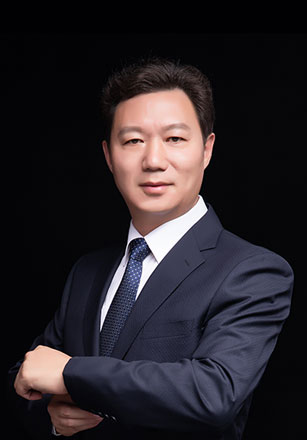
Chen Deguang, a senior practicing lawyer at Jinyan Law Firm. With a solid foundation in legal theory and extensive judicial experience, he has a stable, efficient, meticulous and rigorous working style. He has accumulated rich experience and proficient skills in handling cases, which have been highly praised by the clients. His motto is "Strive to maximize the rights and interests of the clients."
He specializes in criminal cases, commercial and economic cases, non-litigation legal services, real estate, and corporate affairs.
Contact Information:
Telephone: 13803919916
Email: Cdg668@163.com

official Weibo:JINYAN LAW FIRM WeChat Official Accounts:JINYAN LAW FIRM(jinyanlawfirm)
Case number: 豫ICP备20020393号
Technical Support:jzline
0391-3581232
 WeChat scan code
